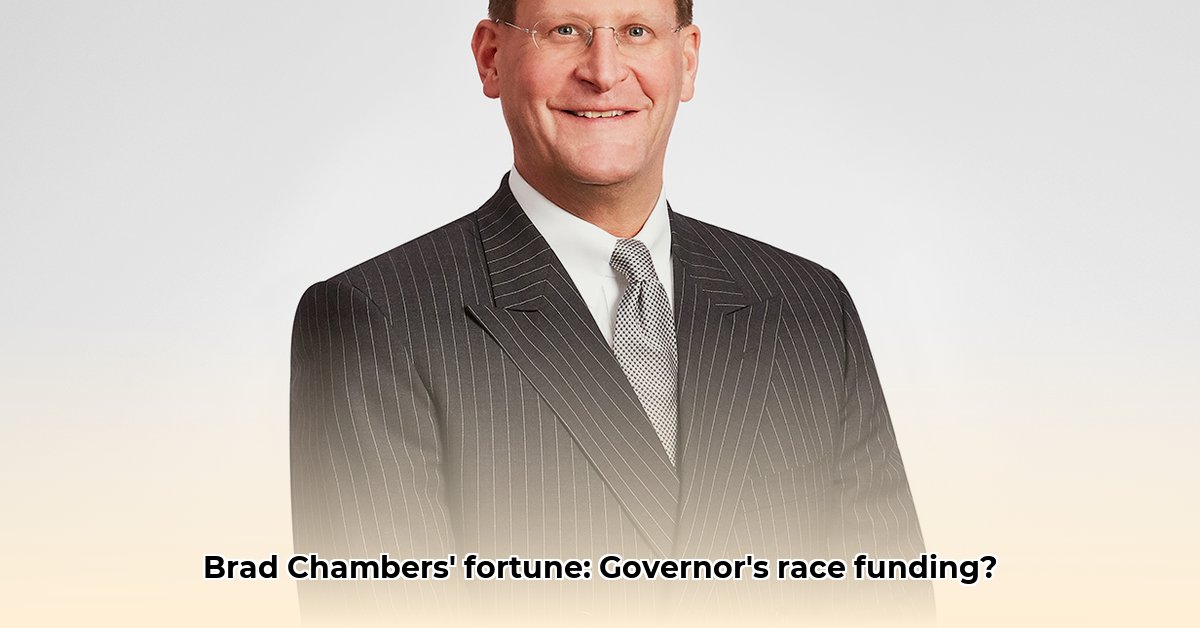
Unpacking Brad Chambers' Financial Landscape
Brad Chambers' candidacy for Indiana governor has ignited significant interest, largely due to the substantial personal wealth he brings to the race. While precise figures remain elusive due to the private nature of personal financial information, a thorough examination of available data provides valuable insights into his financial standing and its potential influence on his campaign. This analysis explores his assets, campaign funding, compliance with Indiana campaign finance regulations, and comparisons with his opponents. Understanding these aspects is crucial for informed voter participation.
Dissecting the Sources of Brad Chambers' Wealth
Determining Brad Chambers' exact net worth presents a challenge. Publicly available information suggests substantial assets accumulated through his career in the business world. These likely encompass successful business ventures, potentially significant real estate holdings, and a diverse investment portfolio. However, the lack of detailed financial disclosures presents limitations in quantifying his wealth definitively. This lack of complete transparency raises concerns about the level of public understanding of candidates' financial backgrounds. It raises a crucial question: how can voters make fully informed decisions when complete financial transparency is lacking?
The Impact of Chambers' Wealth on His Campaign
Chambers' considerable personal wealth fundamentally alters his campaign's financial dynamics. His ability to largely self-fund his campaign minimizes reliance on traditional fundraising routes such as individual donations or Political Action Committees (PACs). This self-funding strategy presents both advantages and disadvantages.
Advantages:
- Increased Independence: Self-funding reduces reliance on special interests or donors potentially seeking favors in return for contributions, potentially promoting more independent policy decisions.
- Enhanced Campaign Spending Capacity: Self-funding provides greater flexibility in allocating campaign resources towards advertising, staffing, and other activities, potentially maximizing voter outreach.
Disadvantages:
- Transparency Concerns: The primary reliance on self-funding diminishes public scrutiny of funding sources, raising concerns regarding potential undisclosed conflicts of interest and the need for greater transparency.
- Perception of Elitism: A candidate's substantial personal wealth could create a perception of detachment from the concerns of average Hoosiers, potentially affecting voter connection and engagement.
Comparing Chambers' Finances to His Opponents
A comparative analysis of Chambers' financial standing against his opponents offers crucial context. However, obtaining precise net worth figures for all candidates remains difficult due to limited public disclosure. Therefore, focusing on primary funding sources provides a more practical approach to understanding relative campaign finances.
| Candidate | Primary Funding Source | Observed Spending Patterns |
|---|---|---|
| Brad Chambers | Primarily self-funded | High spending on advertising, extensive staff |
| [Opponent 1 Name] | [Major funding sources] | [Description of spending patterns] |
| [Opponent 2 Name] | [Major funding sources] | [Description of spending patterns] |
(Note: This table reflects available information and acknowledges limitations in accessing complete financial details.)
Assessing Compliance with Indiana Campaign Finance Laws
Indiana, like other states, has laws governing campaign finance to promote transparency and prevent corruption. While Chambers' self-funding minimizes reliance on traditional donations, questions arise regarding the extent to which his campaign adheres to these regulations. Potential areas of concern could involve the reporting of self-funding, identification of any associated businesses contributing to the campaign, and rigorous adherence to donation limits where applicable. The ongoing debate regarding the balance between a candidate’s financial independence and the public’s right to know demands continuous monitoring and review by the Indiana Election Commission.
The Broader Implications of Wealth in the Election
Chambers' substantial personal wealth could significantly influence the election's outcome. His financial resources could afford:
- Extensive Advertising: Greater spending on television, digital, and other media to broaden voter reach.
- Expanded Campaign Team: Hiring more staff, including experienced strategists, ground organizers, and communication experts.
- Prolonged Campaign: Sustaining a longer, more intense campaign, potentially increasing exposure and voter engagement.
However, financial resources do not guarantee electoral success. Candidate performance, voter issues, and unforeseeable events remain critical determinants of the election outcome. The ultimate influence of Chambers' wealth remains a subject of analysis, highlighting the complexities of personal wealth's impact within the political arena.
Actionable Insights: Analyzing Indiana Campaign Finance Data
This analysis highlights the need for a methodical approach to understanding campaign finance data in Indiana. This involves accessing data from multiple sources, cleaning the data to ensure accuracy, and performing comparative analysis with other candidate funding patterns. This methodical approach is vital in ensuring transparency and accountability in political campaigns, allowing for informed voter participation.